





The modern professional space is becoming increasingly digital. From remote work to business platforms such as LinkedIn, it is becoming the norm. They are all essential tools for building business relations, showcasing an individual's worth, and advancing their careers. To do this, individuals share a lot of their information with potential employers, and that information remains public even after the interaction. Every job update, shared article, and reaction to a post culminates in creating your digital footprint. This permanent trail of personal data and activity is not only useful for recruiters but also for data brokers and cybercriminals. Because of this, it is important that we understand how to keep our digital footprint clean. Here, we will explore just that and the many ways to protect personal information and regain control over it.
Understanding Your Digital Footprint
If you are unfamiliar, a digital footprint is the collection of data compiled from your digital activity.
It is separated into:
-
Active Data – Information that you share intentionally through posts, blog articles, and other personal activities.
-
Passive Data – Information that is collected without direct input. This is generally your browsing history, location, and interactions with other users online.
This accounts for all your social media activity and even Google searches. Naturally, this raises privacy concerns for many, and they wish to remove personal information from Google and other places where it is stored. This matters because business partners and clients will often look up who they are working with. As such, it is important to have a clean digital footprint that portrays the best an individual can offer.
Source: Pexels
Networking Risks and Oversharing
Networking thrives on authenticity and sharing some personal information to create a bond. It is important to portray value through first interactions, and sharing experiences, skills, and expertise is the best way to do so. But this can quickly turn into digital oversharing and become a personal problem for the individual. Sharing too much personal information carries many risks that can lead to:
-
Professional Repercussions – Sharing controversial opinions or confidential details about work can damage reputation significantly not only for current business ventures, but for future endeavors as well.
-
Targeted Scams and Phishing – A lot of personal information available to the public attracts cybercriminals. They utilize this information to create convincing schemes that individuals easily fall for.
-
Data Misuse by Third Parties – Individuals just browsing the web create a lot of valuable data that is collected and sold to advertisers and data collectors. By oversharing, individuals increase the amount of data available for these systems.
It is important to note that identity theft also falls under this category. This is why it is important that everyone thinks about what personal data they share. All in an effort to prevent someone from impersonating you online or government institutions. Fundamentally, it is important to understand that the more you share, the more you give to others.
Practical Privacy Protection Tips
In light of all the risks we discussed, let’s cover some of the ways we can keep our digital footprint clean. To start minimizing a digital footprint, it is first important to assess it regularly. By using search engines to search for your name or nicknames in various forms, we can get an idea of what our footprint is like. While here, it is also important to check image search and locate any old and unused accounts. Now that we have a good grasp of our online presence, we can move on to removing unwanted information from the internet.
We can start by deleting unused profiles or changing privacy settings to minimize the amount of shared data. By limiting who can see our connections, information, and photos, we minimize our footprint. To take this a step further, we need to remove the same information from public databases. This is where opting out comes in, as now we need to manually or automatically, through a data removal service, take control of our data. It is important to cover all sensitive information and remove it from the public eye. Additionally, if we find some content outside of our reach, for example, posted on a website without your consent, the removal is as simple as submitting a removal request directly.
Now that our digital footprint is fresh and under control, it is time to decide what kind of digital footprint we want to leave. To curve our footprint to where we want it to be, we can post content that benefits our image. Be it blog posts that share industry insights or professional portfolio sites, these pages will improve our image. From here, we simply have to maintain our image and minimize data leakage for our own privacy and reputation. By being selective in our posts and seeing our footprint through a new lens, we will revitalize it.
Tools for Strengthening Digital Privacy
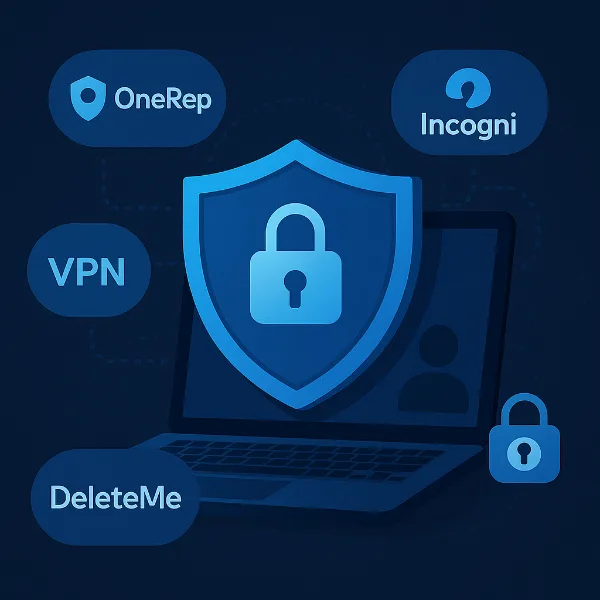
When it comes to protecting your digital footprint, tools such as password managers, VPNs, and data removal services are essential.
-
Password Managers (1Password, LastPass, etc.) – These help you generate and store strong, unique passwords for every account. By reducing the risk of weak or repeated passwords, they protect against breaches and credential stuffing.
-
VPNs (Virtual Private Networks) – A VPN encrypts your internet connection, masking your IP address and making it harder for third parties, advertisers, or even hackers to track your browsing activity.
-
Data Removal Services (DeleteMe, Kanary, etc.) – These services scan data broker sites and remove your personal information from public listings, reducing exposure and risk of identity theft.
By combining these tools, you create a layered security system that protects your personal and professional presence online. This not only helps keep your data safe but also ensures your digital reputation remains strong.
Balancing Visibility and Privacy
Another important part of a digital footprint is learning to balance visibility and privacy. The best option will never be going fully offline, as most of us need to be digitally visible for business. If we want to remain discoverable while networking, we need to be visible for the right reasons.
This can be challenging as many who post online don’t simply post about their business, but their personal life as well. Finding the perfect balance that fits both criteria seems difficult, but it is actually quite simple. To strike that balance, we simply need to:
-
Create Curated Content – By sharing professional achievements and valuable content in your industry, you will improve your standing in the field.
-
Leveragy Privacy Settings – Privacy features are an amazing invention that will allow you to separate your private and business life completely.
-
Upkeep Public Profiles – An up-to-date profile is the best representation of you. Additionally, if you constantly upkeep profiles, you will know if there is any sensitive information available to the public.
-
Be Mindful of Tagged Content – Your pages and profiles are not the only places your images and videos can pop up. So keep in mind to adjust your privacy settings and untag yourself whenever necessary.
With this, a digital footprint becomes not only an extension of you but an extension of your professional reputation. By maintaining it effectively, its longevity and value are ensured, and you know what someone sees when they look you up.


